
8 Cycles of School Practice
The 8 Cycles of School Practice is based on evidence of the most efficient and effective ways to improve teaching quality, lift student attendance, and maximise and sustain student gains. Great schools use these cycles to drive effective teaching and student learning through routines and continuous improvement.

Become a Partner School
Best Practice
Good to Great Schools Australia has built these practices into a unique framework that provides schools with an easy-to-follow structure so they can organise their practices into a seamless pattern of delivery.
The 8 Cycles of School Practice guides school leadership and teaching teams in placing effective teaching at the centre of their instructional efforts. The practices align with the teaching pedagogies and programs.
The digitised version allows schools to learn how to implement the best practices to optimise their improvement efforts. Schools use this tool to capture data to monitor their delivery of the cycles of practice.


Based on the Highest Standards
Access our range of professional learning modules

Professional Learning Modules
The 8 Cycles of School Practice package contains online, self-paced professional learning modules that cover the knowledge, skills and practices of effective teaching, including Direct Instruction.
Good to Great Schools Australia provides all Partner Schools with free access to the 8 Cycles of School Practice Professional Learning Modules.
Practice Cycle 1: School Professional Learning
 |
Practice Manage School Professional LearningPractice Manage School Professional Learning highlights the importance of how principals actively drive professional learning within schools, by overseeing and guiding it. In this module, participants will explore the barriers that get in the way of effective managing of professional learning and strategies to overcome these barriers. By refining this practice, principals can lead school-wide professional growth so that each member on the team gets targeted development based on their role and priorities for improvement. Through this module, participants will gain insights into effective leadership practices that foster a culture of continuous learning. |
 |
Practice Participate in CoachingPractice Participate in Coaching is a practice module that deepens understanding of why it is important to participate in coaching. |
 |
Practice Pass AssessmentsPractice Pass Assessments focuses on the importance of achieving mastery in teaching techniques and practices that are supported through assessments. Participants will explore the obstacles that may hinder success in assessments and learn strategies to overcome these barriers. By mastering this process, team members can improve their skills in teaching, gain certification and hence make their professionalism better. This module provides insights into how assessments validate a teacher’s expertise in delivering effective instruction. |
Practice Cycle 2: Classroom Coaching
 |
Practice Conduct CoachingConduct coaching with fidelity. Participants learn what happens when conduct coaching is not conducted with fidelity, the ba0-rriers that may stand in the way of delivering well and how to overcome barriers so that conduct coaching can be delivered with fidelity. |
 |
Practice Apply Improvement and MasteryPractice Apply Improvement and Mastery highlights the importance of continuous development in teaching practices to enhance student outcomes. Participants will explore some of the barriers that can prevent improvement and mastery, including effective ways to overcome these. To master this process gives educators an opportunity to refine their skills, build confidence, and hence have more impactful teaching. This module emphasises the role of constructive feedback and targeted improvement so as to support mastery by teachers and teaching assistants. |
 |
Practice Demonstrate Mastery to Teaching TeamDemonstrate Mastery to Teaching Team examines the benefits and impacts of delivering mastery to teaching team with fidelity. Participants learn what happens when demonstrating mastery to teaching team is not conducted with fidelity, the barriers that may stand in the way of delivering well and how to overcome barriers so that demonstrating mastery to teaching team can be delivered with fidelity. |
Practice Cycle 3: School Data Review
 |
Practice Assess School ContextAssess School Context examines the benefits and impacts of the delivery of assessing school context with fidelity. Participants learn what happens when assess school context is not conducted with fidelity, the barriers that may stand in the way of delivering it well and how to overcome barriers so that assessing school context can be delivered with fidelity. |
 |
Practice Set, Manage and Review School Improvement PlanPractice Set, Manage and Review School Improvement Plan is a practice module that deepens understanding of why it is important to set, manage and review school improvement plan. |
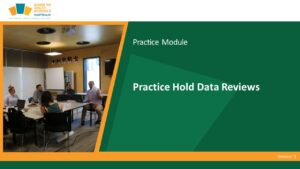 |
Practice Hold Data ReviewsPractice Hold Data Reviewsexamines the benefits and impacts of delivering data reviews with fidelity. Participants learn what happens when data reviews are not conducted with fidelity, the barriers that may stand in the way of delivering well and how to overcome barriers so that data reviews can be delivered with fidelity. |
 |
Practice Implement Improvement PlanPractice Implement Improvement Planexamines the benefits and impacts of delivering implementing an Improvement Plan with fidelity. Participants learn what happens when practice is not conducted with fidelity, the barriers that may stand in the way of delivering well and how to overcome barriers so that implementing an Improvement Plan can be delivered with fidelity. |
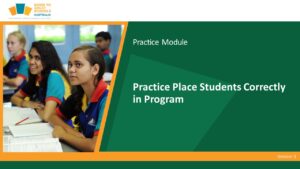 |
Practice Place Students Correctly in ProgramPractice Place Students Correctly in Program examines the benefits and impacts of delivering placing students correctly in program with fidelity. Participants learn what happens when placing students correctly in program is not conducted with fidelity, the barriers that may stand in the way of delivering well and how to overcome barriers so that placing students correctly in program can be delivered with fidelity. |
Practice Cycle 4: Classroom Data Review
 |
Practice Classroom Data WallPractice Classroom Data Wall examines the benefits and impacts of updating the classroom data wall with fidelity. Participants learn what happens when the classroom data wall is not updated with fidelity, the barriers that may stand in the way of delivering well and how to overcome barriers so that updating the data wall can be delivered with fidelity. |
 |
Practice Produce Accurate and Timely DataPractice Produce Accurate in-depth, and Timely Data is a practice module that goes in-depth for participants to learn what happens when the technique is delivered with fidelity. They learn what happens when producing accurate and timely data is not delivered with fidelity, the barriers and how to overcome the barriers to produce accurate and timely data with fidelity. |
Practice Cycle 5: School Professional Conversations
 |
Practice Use Evidence to Discuss Successes and ChallengesPractice Use Evidence to Discuss Successes and Challenges examines the benefits and impacts of using evidence to guide professional conversations. Participants learn what happens when discussions are not evidence-based, the barriers that may stand in the way and how to overcome them so that teams can analyse successes and challenges collaboratively and strengthen teaching practices. |
 |
Practice Apply Evidence-Based LearningsPractice Apply Evidence-Based Learnings examines the benefits and impacts of applying evidence-based learnings with fidelity. Participants learn what happens when learnings are not applied consistently, the barriers that may stand in the way and how to overcome them so that schools strengthen teaching practice and student outcomes through shared expertise. |
|
Practice Use Evidence to Discuss Successes and Challenges with Peer SchoolsPractice Use Evidence to Discuss Successes and Challenges with Peer Schools is a practice module that goes in-depth for participants to learn what happens when using evidence to discuss successes and challenges is delivered with fidelity. They learn what happens when evidence-based discussions of successes and challenges are not delivered with fidelity, the barriers to using evidence to discuss successes and challenges with fidelity, and how to overcome those barriers. |
|
Practice Apply Evidence-Based Learnings with Peer SchoolsPractice Apply Evidence-Based Learnings with Peer Schools examines the benefits and impacts of applying evidence based learnings with peer schools with fidelity. Participants learn what happens when the technique is not conducted with fidelity, the barriers that may stand in the way of delivering well and how to overcome barriers so that applying evidence based learnings with peer schools can be delivered with fidelity. |
Practice Cycle 6: Classroom Collaboration
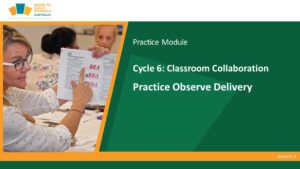 |
Practice Observe DeliveryPractice Observe Delivery focuses on the importance of observing the delivery of effective teaching techniques to enhance professional learning and teaching capacity. Participants will learn to overcome barriers that may reduce effective observation while honing their ability to apply the practice itself. This in turn fosters a culture of collaboration and continuous improvement across the team. Staff learn best practices, build teaching capacity and reinforce professional relationships by observing peers evidencing mastery in effective teaching practices. |
 |
Practice Hold Weekly Lesson PracticePractice Hold Weekly Lesson Practice is a practice module that deepens understanding of why it is important to hold weekly lesson practice. |
Practice Cycle 7: School Improvement Partnership
 |
Practice Build Positive Expectations with School CommunityBuild positive expectations with school community examines the benefits and impacts of the delivery of building positive expectations with school community with fidelity. Participants learn what happens when building positive expectations with school community is not conducted with fidelity, the barriers that may stand in the way of delivering it well, and how to overcome barriers so that building positive expectations with school community can be delivered with fidelity. |
 |
Practice Provide Improvement Updates to School CommunityProviding improvement updates to the school community examines the benefits and impacts of the delivery of providing improvement updates to the school community with fidelity. Participants learn what happens when providing improvement updates to the school community is not conducted with fidelity, the barriers that may stand in the way of delivering it well, and how to overcome barriers so that providing improvement updates to the school community can be delivered with fidelity. |
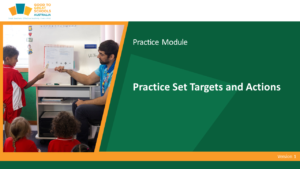 |
Practice Set Targets and ActionsSetting targets and actions examines the benefits and impacts of the delivery of setting targets and actions with fidelity. Participants learn what happens when setting targets and actions is not conducted with fidelity, the barriers that may stand in the way of delivering it well, and how to overcome barriers so that setting targets and actions can be delivered with fidelity. |
 |
Practice Organise Parent and Community InvolvementOrganise Parent and Community Involvement examines the benefits and impacts of the delivery of organising parent and community involvement with fidelity. Participants learn what happens when organise parent and community involvement is not conducted with fidelity, the barriers that may stand in the way of delivering it well and how to overcome barriers so that organising parent and community involvement can be delivered with fidelity. |
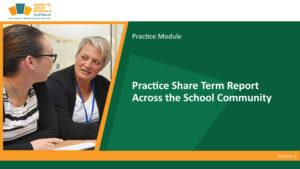 |
Practice Share Term Report Across the School CommunityPractice Share Term Report Across School Community examines the benefits and impacts of sharing the term report across the school community with fidelity. Participants learn what happens when sharing the term report across the school community is not conducted with fidelity, the barriers that may stand in the way of delivering well and how to overcome barriers so that sharing the term report across the school community can be delivered with fidelity. |
 |
Practice Distribute Student Report Cards to ParentsPractice Distribute Student Report Cards to Parents highlights the importance of distributing student report cards to parents as a key practice for fostering stronger home-school partnerships. Participants will explore strategies to overcome challenges in this process, ensuring that parents are actively engaged in their child’s learning journey and equipped to support progress effectively. |
 |
Practice Share Strategies and Actions with Community (Coming soon)Practice Lead Target Setting with Teaching Team (Coming soon) |
Practice Cycle 8: Parent Classroom Engagement
|
Practice Distribute Student Report Cards to ParentsPractice Distribute Student Report Cards to Parents highlights the importance of distributing student report cards to parents as a key practice for fostering stronger home-school partnerships. Participants will explore strategies to overcome challenges in this process, ensuring that parents are actively engaged in their child’s learning journey and equipped to support progress effectively. |
 |
Practice Hold Influencing Conversations with Parents (Coming soon)Hold influencing conversations with parents examines the benefits and impacts of delivering influencing conversations with fidelity. Participants learn what happens when conversations with parents are not delivered with fidelity, the barriers that may stand in the way of delivering well and how to overcome barriers so that influencing conversations with parents can be delivered with fidelity. |
 |
Practice Schedule Parent Classroom VisitsScheduling parent classroom visits examines the benefits and impacts of delivering scheduling parent classroom visits with fidelity. Participants learn what happens when scheduling parent classroom visits is not delivered with fidelity, the barriers that may stand in the way of delivering well and how to overcome barriers so that scheduling parent classroom visits can be delivered with fidelity. |
 |
Practice Share Student Data with ParentsPractice Share Student Data with Parents emphasises the importance of sharing student data with parents to strengthen the home-school partnership and support student success. Participants will learn to overcome challenges in effectively sharing data, ensuring parents understand their child’s academic progress and how to contribute to improvement efforts. |
Practice Cards
The 8 Cycles of School Practice package contains online, self-paced professional learning modules that cover the knowledge, skills and practices of effective teaching, including Direct Instruction.
Good to Great Schools Australia provides all Partner Schools with free access to the 8 Cycles of School Practice Professional Learning Modules.
Practice Cycle 1: School Professional Learning
The School Professional Learning cycle enables leaders and the teaching team to embed planning routines, complete professional learning and implement what they learn into their practice. It ensures the entire team is actively engaged in professional learning and continually develops their professional practice.
Practice Cycle 2: Classroom Coaching
The Classroom Coaching cycle enables team members to embed routines for continuous improvement in their effective teaching techniques through coaching. It ensures the leaders observe the teaching and continually demonstrate, model and provide feedback on effective teaching.
 |
Demonstrate Mastery to the Teaching Team Practice CardThe Demonstrate Mastery to the Teaching Team Practice Card supports instruction coaches in implementing demonstration lessons. Demonstrating mastery to the teaching team provides a model of effective teaching for teachers and teaching assistants. |
 |
Observe Teaching Practice Practice CardThe Observe Teaching Practice Practice Card supports principals and instruction coaches when conducting classroom observations. When principals and instruction coaches observe lessons, they can gauge the effectiveness of teaching and student engagement to guide feedback and improve classroom practice. |
 |
Demonstrate Conduct Coaching Practice CardThe Demonstrate Conduct Coaching Practice Card supports instruction coaches in conducting coaching cycles. Coaching provides teachers with meaningful feedback that they can use to improve teaching techniques and increase student achievement. |
Practice Cycle 3: School Data Review
The School Data Review cycle enables teaching teams to embed routines to collect, analyse and action student progress and program delivery data. The cycle ensures the team continually diagnoses teaching and learning data, gives and receives feedback and takes action to improve effective teaching.
 |
Display School Data Practice CardThe Display School Data Practice Card supports principals and instruction coaches in creating, displaying and using school data walls. When school leaders use data displays to support teachers and celebrate achievements, they reinforce a culture of high expectations. |
Practice Cycle 4: Classroom Data Review
The Classroom Data Review cycle enables school leaders and the teaching team to embed routines to test, analyse and respond to student data. It ensures the teaching team actively analyses student data and continually strives to meet learning targets.
 |
Display Classroom Data Practice CardThe Display Classroom Data Practice Card supports teachers in creating and maintaining purposeful classroom data walls. Teachers use classroom data walls to show classroom targets and progress to students and visitors. |
 |
Use Data to Motivate Students Practice CardThe Use Data to Motivate Students Practice Card supports teachers in using data to help students set goals and track progress. When teachers use data in this way, they communicate high expectations and support the creation and use of effective data walls. |
Practice Cycle 5: School Professional Conversations
The School Professional Conversations cycle enables school leaders to embed a culture of professional conversations among the teaching team. It ensures the teaching team actively problem-solves together so that members collectively share successes and resolve challenges.
Practice Cycle 6: Classroom Collaboration
The Classroom Collaboration cycle enables teaching teams to embed a culture of classroom collaboration. It ensures the teaching team actively works together to set high expectations, improve their effective teaching techniques and practice, and increase student learning.
 |
Hold Lesson Practice Practice CardThe Hold Lesson Practice Practice Card supports teachers and teaching assistants in preparing to deliver lessons effectively. Lesson practice helps ensure teachers and teaching assistants are ready to deliver lessons so that student learning is maximised. |
 |
Peer Observation of Effective Teaching Practice CardThe Peer Observation of Effective Teaching Practice Card supports instruction coaches in using peer observations to strengthen teachers’ teaching techniques. Peer observations increase teachers’ capacity through collaboration and shared professional learning. |
Practice Cycle 7: School Improvement Partnership
The School Improvement Partnership cycle enables the teaching team to continually embed family and community engagement routines to strengthen the education partnership between the school and the community. It ensures the school has a forum to collaborate with the community supporting parents to contribute to their children’s education.
Practice Cycle 8: Parent Classroom Engagement
The Parent Classroom Engagement cycle enables the teaching team to embed routines around parents’ commitment to their children’s success by inviting them to participate in the learning. It promotes relationships between parents and the teaching team to ensure parents actively engage in their children’s education.
 |
Engage with Parents Practice CardThe Engage with Parents Practice Card supports teachers in engaging parents in conversations about their child’s academic progress and behaviour. When the school team engages with parents, they share information about student progress and help parents understand how they can support their child’s learning and behaviour at home. |
 |
Host Parents in the Classroom Practice CardThe Host Parents in the Classroom Practice Card supports teachers in inviting and engaging parents in classroom visits. When parents are engaged in classrooms, student attendance increases and behaviour improves. |
Additional 8 Cycles of School Practice Implementation Resources
Good to Great Schools Australia provides all Partner Schools with free access to the Additional Implementation Resources.
 |
8 Cycles of School Practice Implementation GuideThe 8 Cycles of School Practice Implementation Guide supports school leaders and teaching teams in implementing the 8 Cycles of School Practice. It provides guidance on how schools can embed effective teaching practices and continuous improvement across the school. |
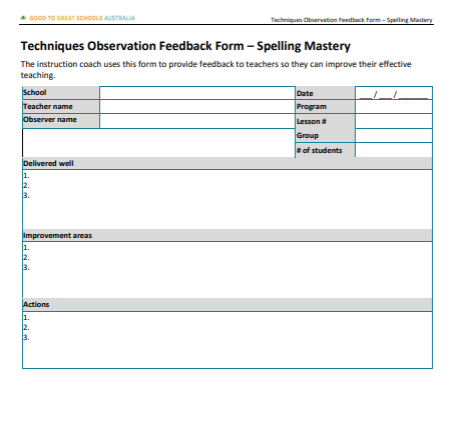 |
Techniques Observation FormThe Techniques Observation Form supports principals and instruction coaches in observing teaching techniques during classroom practice. It is used to record observations and guide feedback and coaching conversations. |
 |
Practices Observation FormThe Practices Observation Form is used to assess the fidelity of teaching practices through direct classroom observation or video review of a school team member during mastery assessments. |
 |
Annual Student Support PlanThe Annual Student Support Plan supports teachers and school teams in documenting student support needs and monitoring progress across the year. |
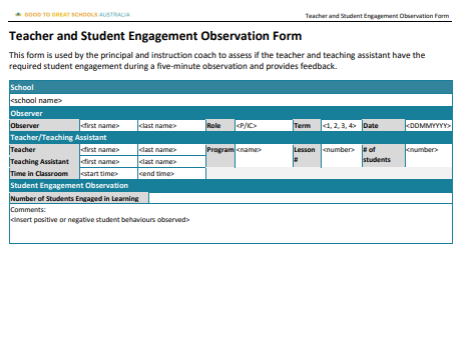 |
Student Engagement Observation FormThe Student Engagement Observation Form supports principals and instruction coaches in assessing student engagement during classroom observations |
 |
Individual Professional Learning PlanThe Individual Professional Learning Plan supports teachers, teaching assistants, instruction coaches and school leaders in planning their professional learning. |
 |
Instructional Leadership ToolThe Instructional Leadership Tool supports instructional leaders in tracking observations across the 8 Cycles of School Practice. |
Student Performance Data ChecklistThe Student Performance Data Checklist supports teachers and school leaders in reviewing and monitoring student performance data. |
Full 8 Cycles of School Practice Resources
Cycle 1: School Professional Learning
Cycle 1
The School Professional Learning cycle enables leaders and the teaching team to embed planning routines, complete professional learning and implement what they learn into their practice. It ensures the entire team is actively engaged in professional learning and continually develops their professional practice.
Resources
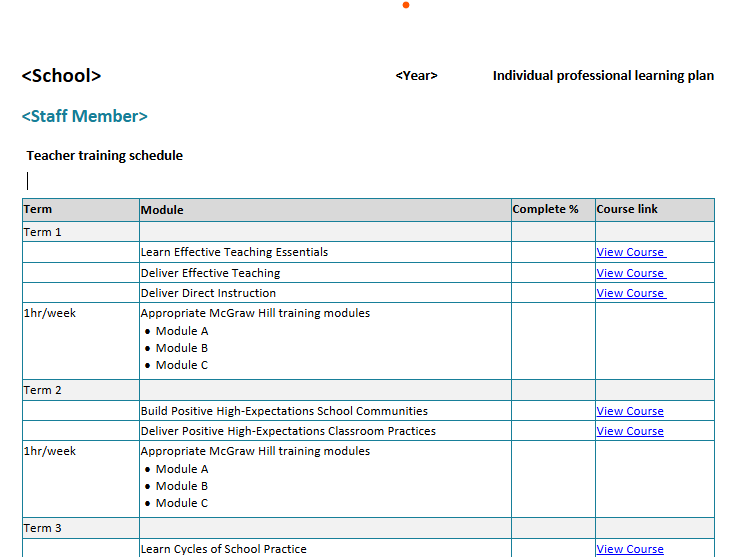 |
Individual Professional Learning PlanThe Individual Professional Learning Plan is a custom professional learning plan for Teachers, Teaching Assistants, Instruction Coaches and Principals/Members in leadership roles. |
 |
School Professional Learning PlanThe School Professional Learning Plan outlines the professional learning and training to be completed by each faculty member across the year, including scheduled timelines for completion. |
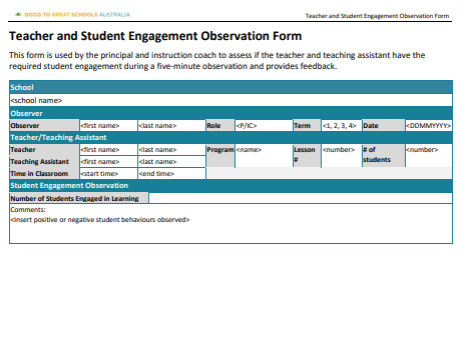 |
Teacher and Student Engagement Observation FormThe Teacher and Student Engagement Observation Formis used by the principal and instruction coach to assess if the teacher and teaching assistant have the required student engagement during a five-minute observation and provides feedback. |
Cycle 2: Classroom Coaching
Cycle 2
The Classroom Coaching cycle enables team members to embed routines for continuous improvement in their effective teaching techniques through coaching. It ensures the leaders observe the teaching and continually demonstrate, model and provide feedback on effective teaching.
Resources
 |
Classroom Ecology ChecklistThe Classroom Ecology Checklist contains a set of questions to help ascertain the ecological factors of a classroom and to plan for improvement. |
 |
Classroom Management Self-AssessmentThe Classroom Management Self-Assessment Survey is to help Teachers reflect on basic evidence-based practices and/or prioritise actions. |
 |
Classroom Observation Self-AssessmentThe Classroom Observation Self-Assessment is a form for Teachers and Instruction Coaches to be filled over 10 consecutive school days. |
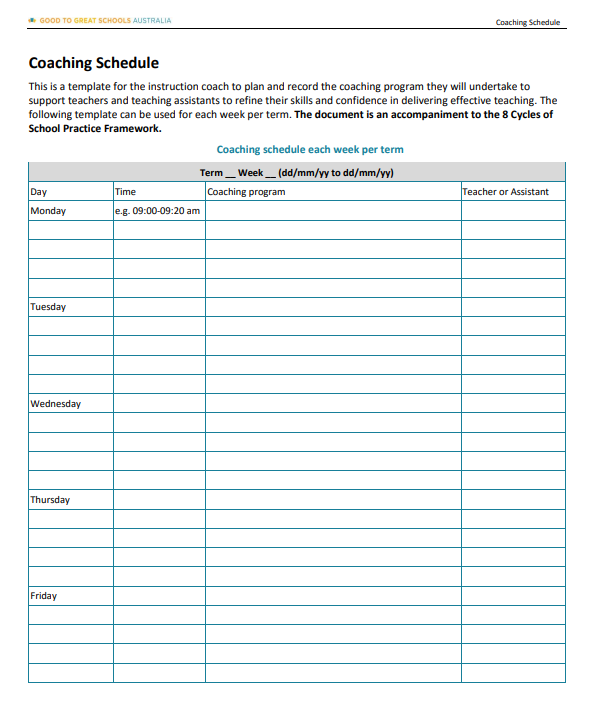 |
Coaching ScheduleThe Coaching Schedule is a template for Instruction Coaches, with a breakdown of coaching activities and a coaching log to plan and record activities. |
|
Demonstrate Conduct Coaching Practice CardThe Demonstrate Conduct Coaching Practice Card supports instruction coaches in conducting coaching cycles. Coaching provides teachers with meaningful feedback that they can use to improve teaching techniques and increase student achievement. |
|
Demonstrate Mastery to the Teaching Team Practice CardThe Demonstrate Mastery to the Teaching Team Practice Card supports instruction coaches in implementing demonstration lessons. Demonstrating mastery to the teaching team provides a model of effective teaching for teachers and teaching assistants. |
 |
Instructional Leadership ToolThe Instructional Leadership Tool enables instructional leaders to track schoolwide progress through the 8 Cycles of School Practice. |
|
Observe Teaching Practice Practice CardThe Observe Teaching Practice Practice Card supports principals and instruction coaches when conducting classroom observations. When principals and instruction coaches observe lessons, they can gauge the effectiveness of teaching and student engagement to guide feedback and improve classroom practice. |
 |
Practices Observation Feedback ReportThe Practices Observation Feedback Report is used by principals, instruction coaches, teachers and teaching assistants to receive feedback on observed practices and identify actions for improvement. |
|
Practices Observation FormThe Practices Observation Form is used to assess the fidelity of teaching practices through direct classroom observation or video review of a school team member during mastery assessments. |
|
School Observation ScheduleThe School Observation Schedule details why, when and how to conduct regular school observations. |
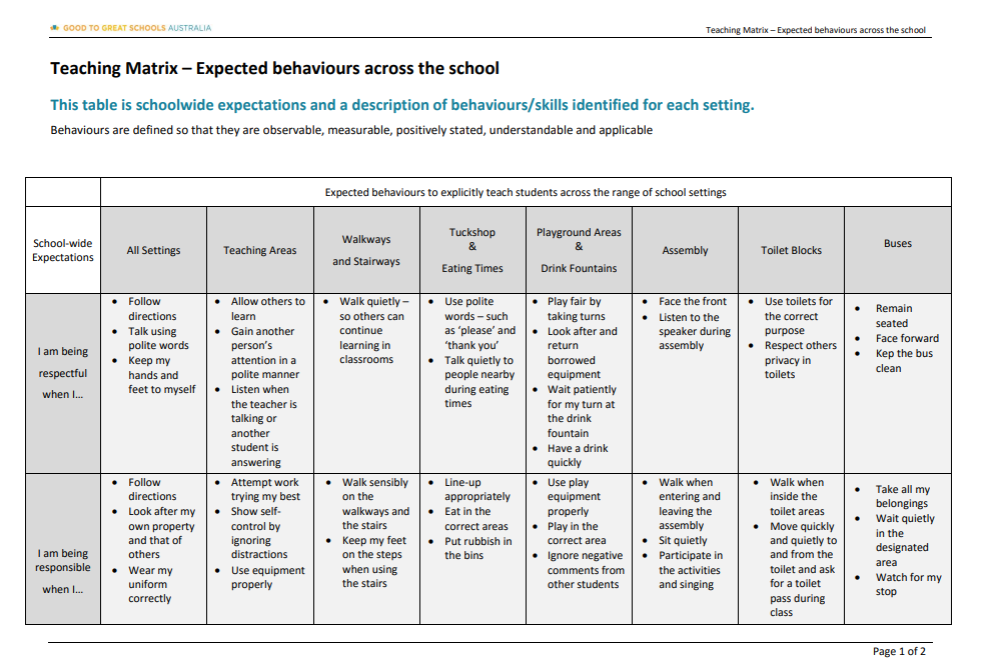 |
School Wide Expectations Teaching MatrixSchool Wide Expectations Teaching Matrix is a matrix for expected behaviours to explicitly teach students across a wide range of school settings. |
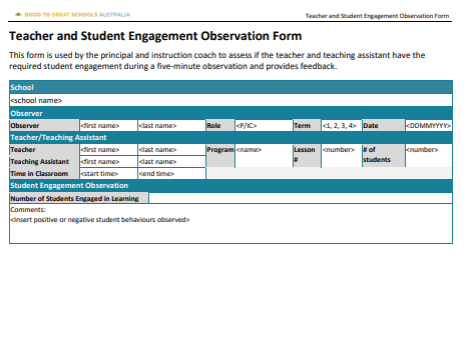 |
Teacher and Student Engagement Observation FormThe Teacher and Student Engagement Observation Form is used by principals and instruction coaches to assess teacher and teaching assistant engagement with students during a five-minute observation and provide feedback. |
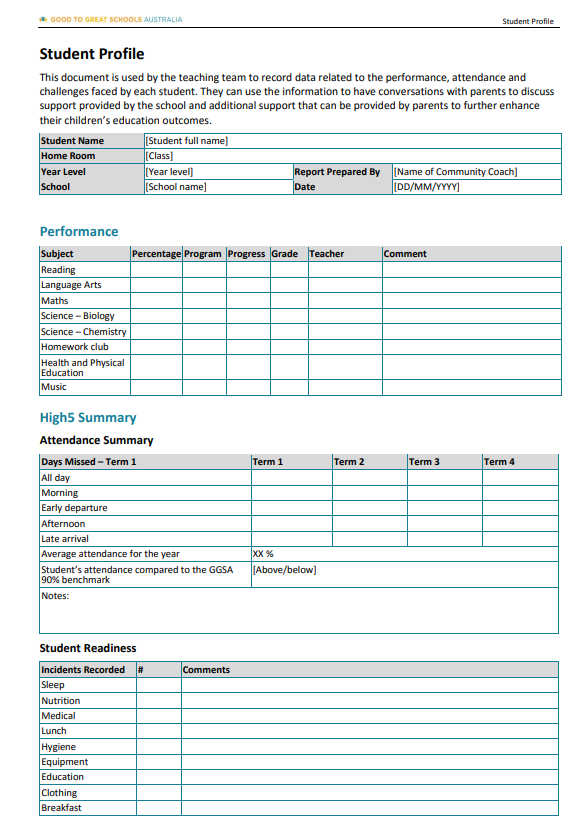 |
Student ProfileThe Student Profile is an annual student profile, assessment and support plan. |
 |
Student Support PlanThe Student Support Plan is a template for student reports, determining performance and readiness, and identifying documents and additional support to be provided. Prepared by Community/Instruction Coaches. |
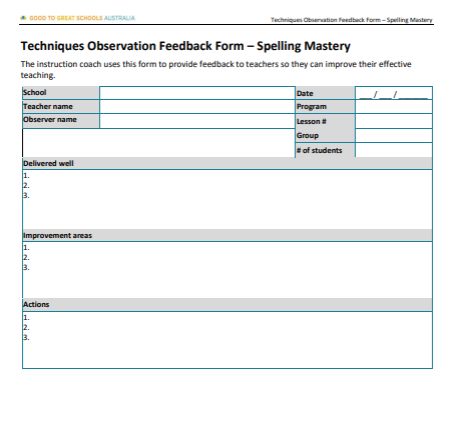 |
Techniques Observation Feedback ReportThe Techniques Observation Feedback Report is used by teachers and teaching assistants to receive feedback on observed teaching techniques and identify actions for improvement. Instruction coaches use this report to guide coaching conversations. |
|
Techniques Observation Feedback FormThe Techniques Observation Feedback Form is for Teachers and Teaching Assistants to receive feedback on observed activities and actions to take. Instruction Coaches can then use the data to guide coaching conversations. |
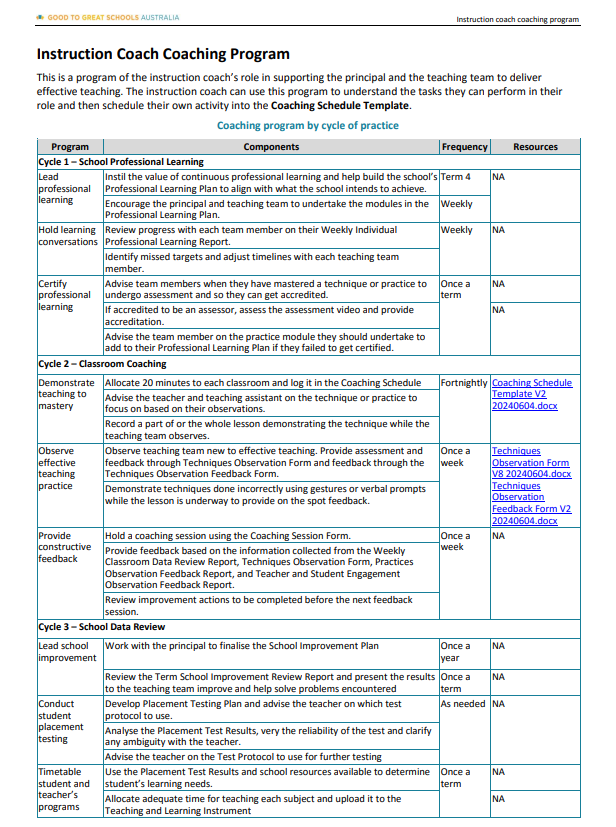 |
Instruction Coach Coaching ProgramThe Instruction Coach Coaching Program outlines the role of the instruction coach in supporting the principal and teaching team to deliver effective teaching. It helps instruction coaches understand the activities and responsibilities of the role and plan their coaching work. |
 |
Engagement and Organisation Observation FormThe Engagement and Organisation Observation Form is used by principals to assess levels of student engagement and classroom organisation during a lesson observation. |
Cycle 3: School Data Review
Cycle 3
The School Data Review cycle enables teaching teams to embed routines to collect, analyse and action student progress and program delivery data. The cycle ensures the team continually diagnoses teaching and learning data, gives and receives feedback and takes action to improve effective teaching.
Resources
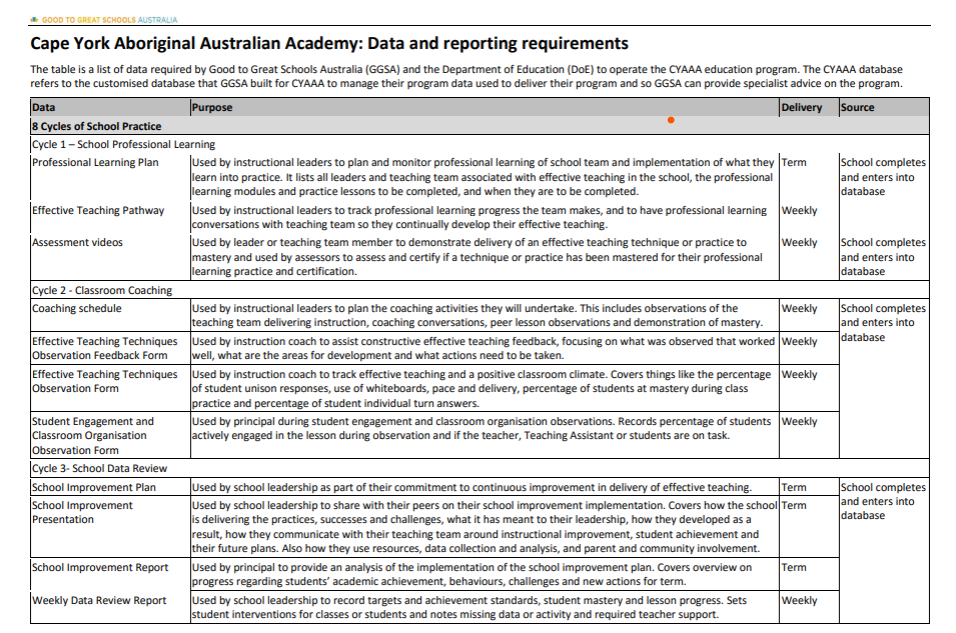 |
Compiling School and Classroom Data ChecklistThe Compiling School and Classroom Data Checklist is a checklist for Teachers and Teaching Assistants to record their usage of weekly school and classroom data documents. |
 |
Data Conversation FormThe Data Conversation Form is a form for Teachers and Instruction Coaches to assess and address student group concerns. |
|
|
Display School Data Practice CardThe Display School Data Practice Card supports principals and instruction coaches in creating, displaying and using school data walls. When school leaders use data displays to support teachers and celebrate achievements, they reinforce a culture of high expectations. |
 |
How to Create Classroom and School Data WallsThe How to Create Classroom and School Data Walls document supports teachers and school leaders in creating classroom and school data walls. It provides information on how to track students’ progress and achievements. |
 |
SPT Operating ManualThe SPT Operating Manual outlines how to use the Student Progress Tool effectively. |
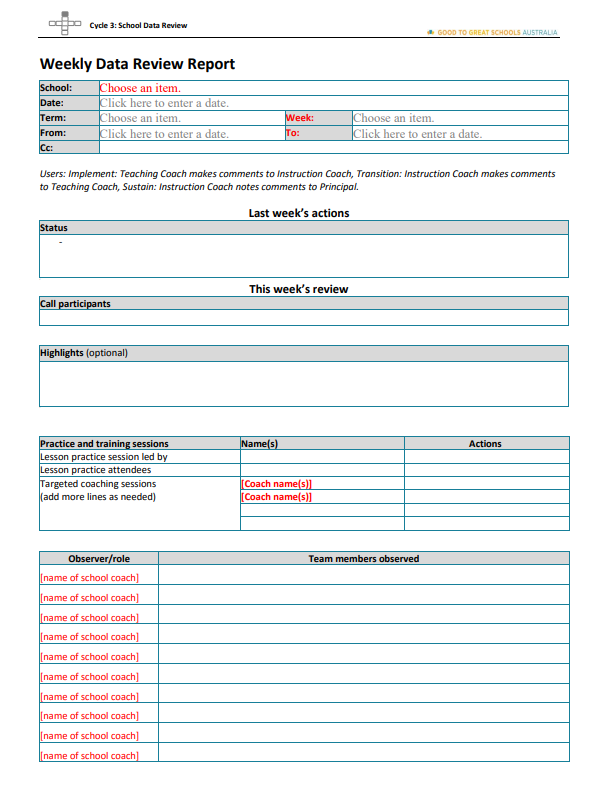 |
Weekly Data Review ReportThe Weekly Data Review Report is a weekly data review tool to be used by different school team members at the stages of Implement, Transition and Sustain respectively. |
Cycle 4: Classroom Data Review
Cycle 4
The Classroom Data Review cycle enables school leaders and the teaching team to embed routines to test, analyse and respond to student data. It ensures the teaching team actively analyses student data and continually strives to meet learning targets.
Resources
|
Data Conversation FormThe Data Conversation Form is a form for Teachers and Instruction Coaches to assess and address student group concerns. |
|
Display Classroom Data Practice CardThe Display Classroom Data Practice Card supports teachers in creating and maintaining purposeful classroom data walls. Teachers use classroom data walls to show classroom targets and progress to students and visitors. |
|
How to Create Classroom and School Data WallsThe How to Create Classroom and School Data Walls document supports teachers and school leaders in creating classroom and school data walls. It provides information on how to track students’ progress and achievements. |
 |
Placement Testing KitThe Placement Testing Kit is designed for School Leaders and Teachers to deliver placement tests to students in all literacy and numeracy programs from Years F – 5. |
|
Use Data to Motivate Students Practice CardThe Use Data to Motivate Students Practice Card supports teachers in using data to help students set goals and track progress. When teachers use data in this way, they communicate high expectations and support the creation and use of effective data walls. |
 |
Weekly Student Performance Data ChecklistThe Weekly Student Performance Data Checklist is a checklist for Teachers and Teaching Assistants to record their use of weekly student performance data documents. |
 |
Weekly Classroom Data Review ReportThe Weekly Classroom Data Review Report supports teachers and teaching assistants in recording the weekly progress or mastery achieved by students and groups in each class against lesson targets. It helps teachers identify issues faced by students or groups and plan additional support and actions to improve student performance. |
Cycle 5: School Professional Conversations
Cycle 5
The School Professional Conversations cycle enables school leaders to embed a culture of professional conversations among the teaching team. It ensures the teaching team actively problem-solves together so that members collectively share successes and resolve challenges.
Resources
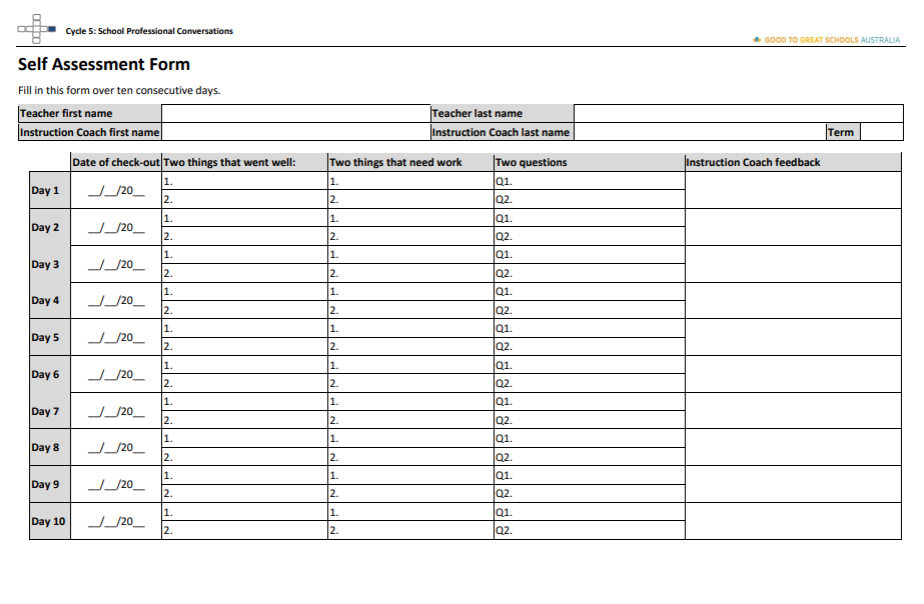 |
Self-Assessment FormThe Self-Assessment Form enables Teachers and Instruction Coaches to conduct self-assessments based on professional conversations over ten consecutive school days. |
Cycle 6: Classroom Collaboration
Cycle 6
The Classroom Collaboration cycle enables teaching teams to embed a culture of classroom collaboration. It ensures the teaching team actively work together to set high expectations, improve their effective teaching techniques and practice and increase student learning.
Resources
|
Hold Lesson Practice Practice CardThe Hold Lesson Practice Practice Card supports teachers and teaching assistants in preparing to deliver lessons effectively. Lesson practice helps ensure teachers and teaching assistants are ready to deliver lessons so that student learning is maximised. |
 |
Lesson Practice FormThe Lesson Practice Form is used by instruction coach to coordinate practice sessions, pair up teachers who has mastered effective teaching and practices (facilitator) with less experienced teachers (participant) and mark their attendance. |
|
Peer Observation of Effective Teaching Practice CardThe Peer Observation of Effective Teaching Practice Card supports instruction coaches in using peer observations to strengthen teachers’ teaching techniques. Peer observations increase teachers’ capacity through collaboration and shared professional learning. |
Cycle 7: School Improvement Partnership
Cycle 7
The School Improvement Partnership cycle enables the teaching team to continually embed family and community engagement routines to strengthen the education partnership between the school and the community. It ensures the school has a forum to collaborate with the community supporting parents to contribute to their children’s education.
Resources
 |
Community ReportThe Community Report highlights key school and community achievements each term, including major events, initiatives and milestones. It helps keep parents and the wider community informed about school progress. |
 |
CSIP Code of Conduct FormThe CSIP Code of Conduct Form outlines the expectations and responsibilities for members participating in a Community School Improvement Partnership. It supports respectful collaboration between schools and community representatives. |
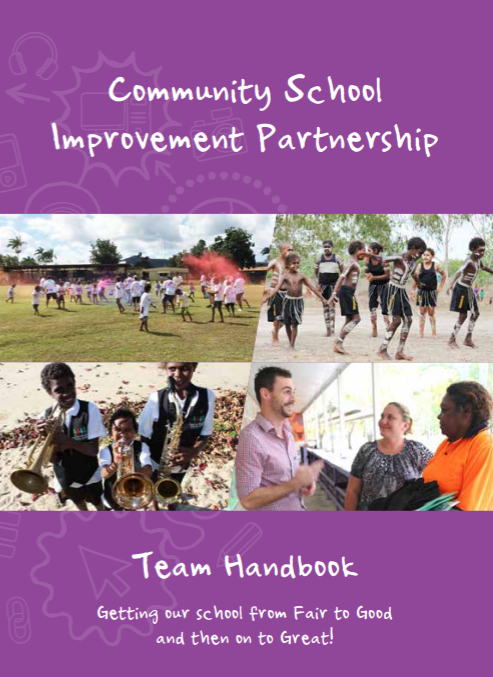 |
CSIP Team HandbookThe CSIP Team Handbook supports principals in organising and leading Community School Improvement Partnership meetings with community members. It provides guidance on roles, meeting structures and effective collaboration. |
 |
School Improvement Implementation GuideThe School Improvement Implementation Guide details how a school improvement partnership helps schools achieve school improvement by embedding sustainable school-wide effective teaching practices that lift teaching and increase student learning. |
 |
School Improvement Plan TemplateThe School Improvement Plan Template supports school teams to document and monitor their school improvement goals, actions and progress. It provides a structured format for planning and implementing improvement strategies with fidelity.The School Improvement Plan Template enables school teams to record holistic school improvement with fidelity. |
 |
School Improvement PresentationThe School Improvement Presentation details the implementation of school improvement practices, positive high-expectation culture and program delivery and outcomes. |
 |
Weekly School Improvement Review ReportThe Weekly School Improvement Review Report is used by the School Leadership to assess the impact their leadership is having on the team’s school improvement journey and to set further improvement actions. |
 |
School Transformation Implementation GuideThe School Transformation Implementation Guide is a comprehensive guide on School Transformation Implementation, with a breakdown of the three stages of implementation support provided by Good to Great Schools Australia. |
Cycle 8: Parent Classroom Engagement
Cycle 8
The Parent Classroom Engagement cycle enables the teaching team to embed routines around parents’ commitment to their children’s success by inviting them to participate in the learning. It promotes relationships between parents and the teaching team to ensure parents actively engage in their children’s education.
Resources
|
Engage with Parents Practice CardThe Engage with Parents Practice Card supports teachers in engaging parents in conversations about their child’s academic progress and behaviour. When the school team engages with parents, they share information about student progress and help parents understand how they can support their child’s learning and behaviour at home. |
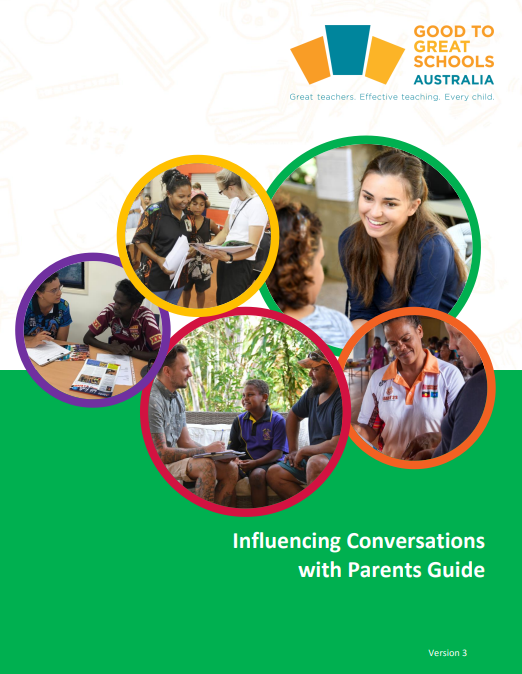 |
Having Influencing Conversations with Parents GuideThe Having Influencing Conversations with Parents Guide assists the school team to successfully engage with parents. It outlines how the leadership and teaching team works with parents to improve the support they provide to their child so the child succeeds in their education. |
|
Host Parents in the Classroom Practice CardThe Host Parents in the Classroom Practice Card supports teachers in inviting and engaging parents in classroom visits. When parents are engaged in classrooms, student attendance increases and behaviour improves. |
 |
Primary School Readiness ChecklistThe Primary School Readiness Checklist is to be completed at the beginning of Term 4 each year for students enrolling in primary school to give an overview of their readiness for school and identify areas where they may need additional practice or support. |
 |
School and Family Compact TemplateThe School and Family Compact Template is a table of model values and behaviours for students, families and the school team. |