Every classroom has students with a blend of personalities, strengths, and learning challenges. Teachers want every student to feel valued, supported and capable of achieving their best.
Supporting students with additional needs relies on more than good intentions. It requires specific, evidence-based strategies to create a structured, predictable and positive environment where every learner can thrive.
Additional needs include a broad range of challenges, like learning difficulties, social-emotional hurdles and behavioural needs. Regardless of the challenge, the foundation for support should remain the same: clear expectations, consistent routines and a high-expectation culture.
This article explores five practical strategies educators can use to better support their students with additional needs.
Strategy 1: Establish a Positive School Culture with Mottos and Values
Support begins long before the lesson starts, beginning with school culture. More than words on a wall, school mottos and values create the school culture. Repetition and clarity are key and mottos can be used as affirmations to create security and belonging.
The Power of a School Motto
A school motto simplifies complex behavioural expectations into a memorable phrase that students can repeat and internalise.
Consider: ‘Get ready. Work hard. Be good.’
A simple phrase, but one that creates three clear actions about the day’s expectations.
- Get ready prompts students to prepare for learning physically (having the right equipment) and mentally (being in the right headspace).
- Work hard reinforces the value of effort over natural ability, signalling to students that trying their best matters.
- Be good encourages pro-social behaviour.
For a student with additional needs, a simple motto provides a quick, accessible reference point. Teachers can point to the motto displayed above the interactive whiteboard to praise a student who demonstrates the values or to redirect focus gently.
Embedding Core Values
Alongside the classroom mottos, classroom values provide the framework for character development. Responsibility, Hard Work, Respect and Continuous Learning provide a roadmap for students on how to interact with their peers and their learning.
You can’t assume every student understands what being responsible looks like in practice; you must explicitly teach it, role model it and practice it consistently. It may include apologising when you hurt someone, acknowledging mistakes, looking after belongings, or understanding consequences. Students respond to concrete behaviours, and this framework provides that, which is particularly beneficial for students who struggle with executive functioning or social cues. Explicit, consistent school-wide expectations reduce anxiety and increase engagement.
Strategy 2: Teach Routines and Classroom Rules
Uncertainty is one of the biggest barriers to learning for students with additional needs. Frustration tends to bubble when they don’t know what comes next or how to do it. It can also create behavioural issues or disengagement, which is where routines and classroom rules play a transformative role.
Routines are the backbone of a quiet, productive classroom. These repetitive processes happen every day, such as entering the classroom, transitioning between activities, or handing in work and when they become automatic, they free up valuable cognitive space for learning.
From Ambiguity to Clarity
Teachers often use the phrase ‘routines are processes, rules are tasks.’ Rules are embedded within routines. For example, the routine for ‘Entering the Classroom’ might include:
- Walk quietly.
- Greet the teacher.
- Get your books.
- Go to your learner position.
For neurotypical students, these steps might seem obvious, but for a student with autism or processing difficulties, the lack of explicit steps can be a major hurdle. Observable, measurable steps provide a clear script for success.
The ‘Teach, Model, Practice’ Approach
It is not enough to hang a poster with the routines. They must be explicitly taught, which involves a cycle of teaching, modelling, practising and reinforcing.
- Teach by explaining the routine and the why. ‘We line up quietly so everyone stays safe and we can start learning quickly.’
- Model to show the students exactly what the routine looks like. Demonstrate the correct way and perhaps even the incorrect way (with humour) to highlight the difference.
- Practice to ensure students physically practice the routine and create muscle memory.
- Reinforce by praising students who are following the routine correctly. ‘I love how Charlotte walked quietly to her desk and got her books out immediately.’
Educators proactively invest time in acknowledging students who do the right thing instead of correcting those who do the wrong thing.
Visual Supports
Visual aids are an essential component of this strategy. Displaying routines with pictures helps students who are visual learners or who struggle with reading and supports explicit instruction.
Strategy 3: Implement Structured Behavioural Supports
Behaviour is communication. A withdrawn student who disrupts the class is often communicating an unmet need or a lack of understanding. Supporting students with additional needs requires a shift to teaching behaviour rather than reacting to it. It should be as explicit as maths or reading, linking back to those school values and motto.
Positive Reinforcement Systems
Positive reinforcement is one of the most effective tools in a teacher’s toolkit, shifting the focus from what students are doing wrong to what they are doing right. Different systems can be compelling motivational tools.
- Stars in a Jar: The class can earn a star when they follow a routine or rule and when the jar is full, the teacher rewards them to build teamwork and collective responsibility.
- Beat the Teacher gamifies behaviour. The class earns points for following rules, while the teacher earns points if they don’t, to make following rules fun rather than a chore.
Specific praise is vital. Instead of a generic ‘good job,’ say ‘I noticed you put your hand up before speaking. That showed great respect.’ It’s all about reinforcing the specific behaviour you want to see again.
Self-Regulation Strategies
Many students with additional needs struggle with emotional regulation and get overwhelmed easily. Teaching self-regulation strategies supplies the tools to manage their emotions, and a dedicated space, like a quiet zone (Zen Den), provides a safe place when students feel overwhelmed.
The routine for using this space should be explicit:
- Notice if you are getting upset.
- Tell the teacher (or use a signal).
- Walk to the Zen Den.
- Take calming breaths.
- Return to the lesson when calm.
Teach this routine when students are calm to ensure its efficacy.
Addressing Bullying with Clarity
For students with additional needs, the school environment can sometimes feel unsafe if bullying is not addressed quickly and efficiently. Maintain a clear, consistent definition of bullying. Bullying involves a desire to hurt, a power imbalance and repetition. It is wholly distinct from one-off conflicts or friendly teasing.
Schools must have a clear process for prevention and intervention, including explicit teaching about what bullying is and isn’t. Establish a structured response for when incidents occur and provide support for both the student who has been bullied and the student engaging in bullying behaviour. It’s a restorative approach that upholds the school’s values of safety and respect.
Strategy 4: Use Direct and Explicit Instruction for Academic Success

While behavioural and emotional support is crucial, academic success is the core concern of schools. Students with additional needs often struggle with inquiry-based learning methods. Direct and explicit instruction removes the ambiguity by breaking learning into smaller increments.
The I Do, We Do, You Do Technique
This model provides a scaffolded pathway to mastery.
- I Do: The teacher models the concept clearly. ‘Watch me as I solve this subtraction problem. I start in the ones column…’
- We Do: The class practices the skill together with the teacher. ‘We’re going to do the next one together, so what is our first step?’ This phase is critical in supporting students with additional needs.
- You Do: Students practice the skill independently once they have demonstrated understanding during the ‘We Do’ phase.
Checking for Understanding
A key component of direct and explicit instruction is frequent checking for understanding. Teachers should constantly check throughout the lesson rather than waiting until the end.
Checking for understanding might involve:
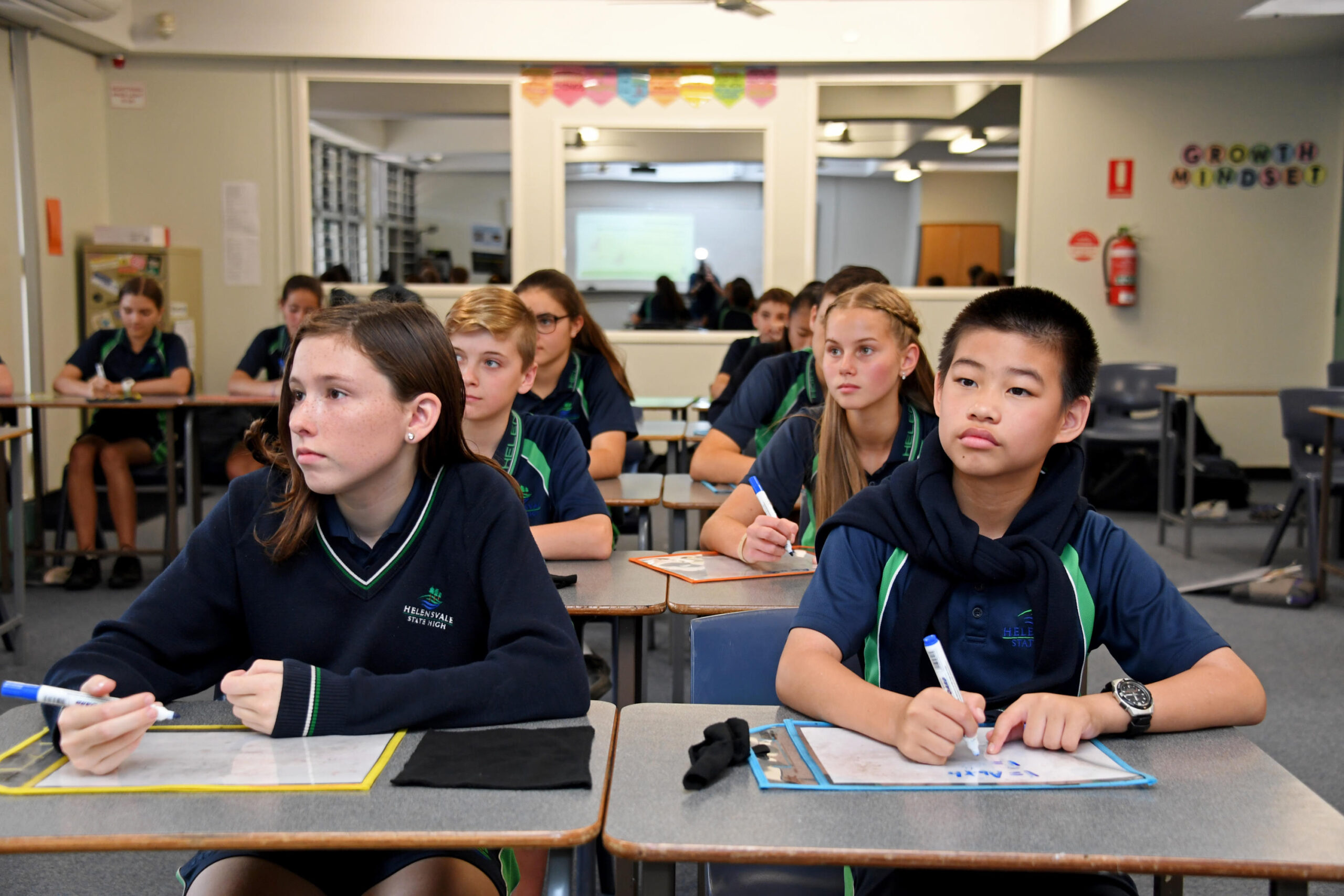
- Asking students to show their answers on mini-whiteboards.
- Using ‘choral response’ where the whole class answers together (e.g., ‘Class, what is the capital of France?’).
- Pair-sharing answers before sharing with the class.
These techniques keep all students active and engaged, building confidence and ensuring they are constantly retrieving and processing information.
Differentiated Support within Direct and Explicit Instruction
Direct and explicit instruction allows for seamless differentiation and because the steps are broken down clearly, teachers can easily identify where a student is stuck and provide targeted support. If a student is struggling during the ‘We Do’ phase, the teacher can provide additional modelling or use physical manipulatives to make the concept concrete before moving on.
Strategy 5: Foster a Team Approach with a School Creed
Supporting students with additional needs is a team endeavour and it requires a united front with teachers, leadership, support staff and parents working together toward a shared vision. A School Creed, which is a statement of intent, can be a powerful means to achieve this.
An example creed might include:
- ‘We embody the values set out by the parents and community.’
- ‘We understand our students’ challenges and know that firm values can help defeat adversity.’
- ‘We consistently model positive behaviours to our students and each other.’
Consistency is Key
Students with additional needs require consistency across different classrooms and teachers. If Mr Smith allows calling out but Ms Jones requires hand-raising, the student has to constantly code-switch, which can be confusing.
A shared creed aligns professional practices to ensure that students experience a consistent environment throughout the day. Consistency reduces anxiety and behavioural issues, ensuring students know exactly where they stand and what is expected of them.
Engaging Parents and Community
The team approach extends beyond the school gates. Nobody knows children better than their parents and engaging them in the language of the school bridges the gap between home and school. Schools can support this by sharing resources in newsletters or parent information sessions and when parents reinforce the motto at home, it amplifies the message.
Bringing It All Together
Supporting students with additional needs is about tearing down barriers and clearing the fog of ambiguity to ensure expectations are both visible and achievable. A calm, positive classroom environment is a better learning environment for every student, allowing teachers to teach and students to learn. At Good to Great Schools Australia, we provide the roadmap for the school day through our Every Child is Special – Positive High-Expectations program.
Implementing change requires time and effort, but the payoff is profound, taking a struggling student to a confident one who greets the teacher prepared for learning.
Transform Your School Culture
See how Good to Great Schools Australia can support your team with a balance of resources, professional learning and curriculum tools designed to build positive, high-performing classrooms.
Access our free Every Child is Special Curriculum resources and become a Good to Great Schools Australia Partner today.

About Julie Grantham
Julie Grantham brings more than 40 years of experience in education as a teacher, principal and senior public servant, including three years as Director-General of the Queensland Department of Education.
During her leadership, Queensland’s state school results consistently improved and teaching and learning practices were strengthened through the introduction of world-class benchmarking.
Julie also led major reforms requiring every Queensland school to define and implement evidence-based pedagogical practices tailored to their context.
Today, as Director of Schools at Good to Great Schools Australia, Julie works with schools and education systems to design and deliver programs that ensure every student has the opportunity to succeed. Be sure to catch Julie each week as she hosts the Good to Great Schools Webinars. For more information, click the link below.