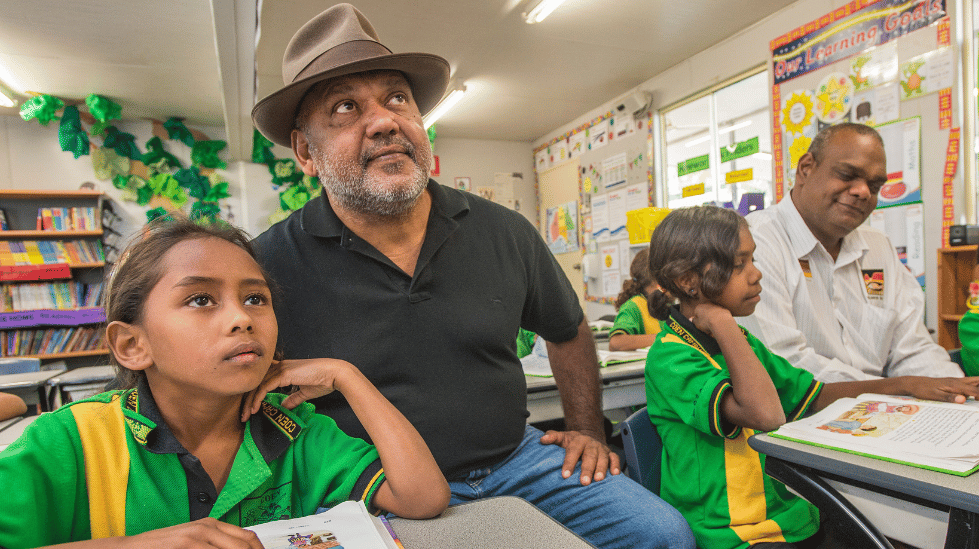
Noel Pearson’s humble beginnings didn’t stop him from succeeding in life, and his story shows that a solid education can change everything. Noel was born in Northern Queensland, raised in a rural community and in a home where English literacy was absent. His Mother was unable to speak or read the language. Yet, that didn’t hold him back from becoming one of the most influential legal minds in Australia.
What bridged the gap? It wasn’t luck; it was the education he received at Hope Vale State School, which provided effective literacy instruction.
Effective Education Bridges the Gap
It was this education that lit a fire inside him to change how Australia teaches children how to read. If literacy is to be the ‘great leveller’ as Noel says in a recent interview, then schools must do more to make it so.
The message is an urgent one: our children are falling behind. At this stage, we are letting down many Australian children on the education front, but it’s particularly damaging to those children who come from disadvantaged backgrounds of non-English-speaking families. Ineffective teaching methods are leaving them behind, and we need to make the change to right the course quickly. While school might be a place of learning and where explicit teaching instils students with the foundational skills necessary to succeed, these skills must also be reinforced at home.
Noel is a dedicated advocate for the direct instruction method. This teacher-led approach is a structured teaching method that places emphasis on clarity, repetition, and phonics. It was widely used throughout the 1970s, and what Noel Pearson himself was exposed to at Hope Vale. However, as the Australian education system moved toward more inquiry-based learning methods, direct instruction fell by the wayside. The issue with inquiry-based learning is the assumption that children will absorb much of their knowledge organically.
However, Noel firmly believes that it was this shift in education systems that led to the harm we see in today’s results. Yes, results have declined, but more importantly, real children have been harmed by the approach. Children who do not have the academic support at home or lack access to books are effectively punished for their upbringing.
For Noel, the issue is equity. Children with a middle-class background arrive on the first day of school equipped with tools other children may not possess. Whether it’s a familiarity with the English language, storytelling, or access to reading materials like books and magazines. If you don’t have that literacy backpack that Noel references, the gap will rapidly widen. Explicit instruction is what bridges the gap, and without it, Noel warns that ‘you are way behind in the race’ from day one of your school career.
Evidence-Based Teaching Methods
There is growing evidence to support Noel’s claims, with many direct instruction and phonics-based programs showing measurable success in improving children’s literacy outcomes. In the schools where these methods have been implemented consistently, the students are improving their reading skills while also building confidence and a deeper sense of achievement, which is good news for engagement levels.
Reading can be a turning point that completely transforms a student’s educational trajectory, and many have fallen behind in what is a foundational subject.
Integrating the Science of Reading
Beyond reinstating teaching methods from the past, Noel is also passionate about integrating the science of reading research into the direct instruction method to modernise the approach. With decades of research, we have a detailed understanding of how the human brain operates and learns to read. ‘Orthographic mapping’ is one of the key concepts and is the term used for permanently storing words in long-term memory. There are three essential components to successful orthographic mapping:
- pronunciation
- spelling
- meaning
Teachers must utilise direct instruction to instil every learner with these key elements to ensure words become instantly recognisable. Fluent readers process text quickly because they have a healthy bank of stored words in their long-term memory, but that won’t happen automatically or overnight. It hinges on systematic teaching, especially in early education. Unfortunately, many of Australia’s current literacy programs teach these components in isolation rather than as the interconnected skills they are. Instead, our teachers should be reinforcing pronunciation, spelling, and meaning through structured practice.
Vocabulary development is also an important aspect of the approach Noel backs. He built a practice of checking the dictionary for meaning when encountering unfamiliar words. Not only did that teach him how to use a word, but it reinforced the correct spelling, contributing to a rich lexicon. With a full dictionary a click away, it should be easy to instil this habit. However, it requires intentional encouragement from patients and teachers and a curiosity to learn more.
Additionally, Noel has emphasised the importance of syllables in Australian literacy instruction. Phonics is focused on individual sounds, but syllables play an important role in understanding more complex words. Breaking words down into syllables provides context clues as to the pronunciation and spelling. This skill can instil a greater sense of confidence when dealing with unfamiliar vocabulary words.
Overcoming Language Barriers
Many children speak English as a second, even a third, language and direct instruction is inclusive of the linguistic and cultural diversity throughout the country. An effective literacy program must incorporate bilingual approaches, respecting Indigenous language phonetic structures, and failure to address this sensitively could cause even the best-designed program to fail.
Good to Great Schools Australia overcomes these challenges with a comprehensive literacy program, informed by the latest research and grounded in direct instruction. As the Executive Director of GGSA, Noel would like to see this universal teaching framework rolled out across Australia, including multilingual and remote communities. The key is providing a consistent approach to literacy education nationwide by relying on an evidence-based approach like direct instruction.
Systemic Issues
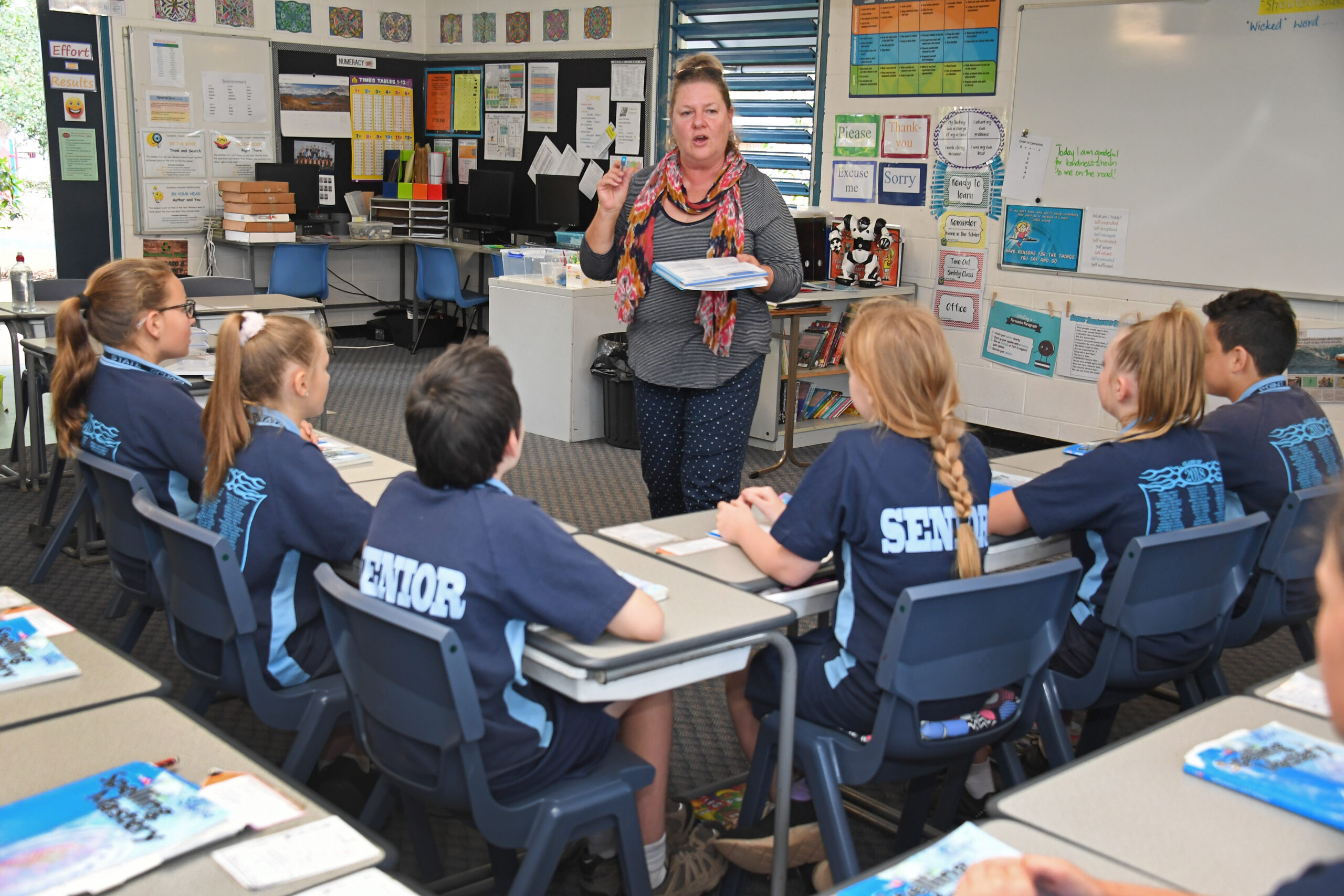
There are broader systemic issues to address, as Noel has noted, the lack of a unified strategy despite billions of dollars in education investment. Without a clear approach, we run the risk of another lost opportunity.
At the core of Noel’s message is the need for an equaliser that empowers students with opportunity, autonomy, and participation. Learning how to read isn’t just a classroom problem; it will follow students throughout their lives, impacting employment prospects and health outcomes, and the solution is well within our reach. We have evidence-based teaching methods at our fingertips; all we need is educators’ buy-in and commitment to consistency.
Education only works as well as we allow it to, and Australia can’t afford to ignore the need for literacy system reformation.
Stay ahead of the curve with Good to Great Schools Australia. Register your interest today to become a GGSA Partner School.
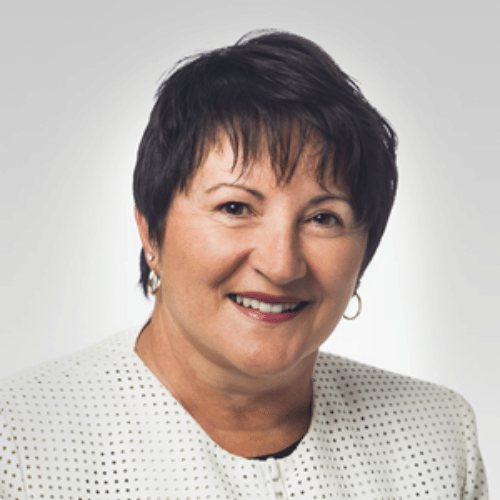
About Julie Grantham
Julie Grantham brings more than 40 years of experience in education as a teacher, principal and senior public servant, including three years as Director-General of the Queensland Department of Education.
During her leadership, Queensland’s state school results consistently improved and teaching and learning practices were strengthened through the introduction of world-class benchmarking.
Julie also led major reforms requiring every Queensland school to define and implement evidence-based pedagogical practices tailored to their context.
Today, as Director of Schools at Good to Great Schools Australia, Julie works with schools and education systems to design and deliver programs that ensure every student has the opportunity to succeed. Be sure to catch Julie each week as she hosts the Good to Great Schools Webinars. For more information, click the link below.