Practical Strategies for Student Social, Emotional and Character Growth
Australian classrooms are rich with learning, connection and growth. Every day, teachers are already building strong relationships, guiding behaviour, and supporting students to navigate friendships, challenges and emotions.
Alongside academic learning, something equally powerful is taking place: students are learning how to manage themselves, relate to others and develop the character traits that will shape their future.
This is where social and emotional learning (SEL) and Character Development (CD) come together. When taught explicitly and consistently, they strengthen not only individual students but whole classrooms and entire school communities.
The question isn’t whether these skills matter; teachers witness their impact daily. The challenge is teaching them in a structured, practical, and sustainable way within busy school settings.
Why Social and Emotional Learning Matters
Social and emotional learning underpins how students engage with their learning, their peers and themselves. Skills such as self-regulation, emotional awareness, empathy and decision-making influence everything from classroom participation to long-term wellbeing.
Research consistently shows that when Social and Emotional Learning is embedded into daily practice, students demonstrate:
- stronger focus and engagement
- improved relationships with peers and teachers
- increased resilience when facing challenges
- greater confidence in learning situations.
In many classrooms, these skills are already being nurtured through conversations, routines and teacher modelling. What makes the difference is when these skills are explicitly taught, practised and reinforced in a structured way.
Rather than being an ‘extra’, Social and Emotional Learning becomes part of how learning happens.
The Role of Character Development
Alongside Social and Emotional Learning, Character Development provides students with a clear understanding of how to act, contribute and grow within their school community.
While Social and Emotional Learning focuses on skills like managing emotions and building relationships, Character Development focuses on the traits that guide behaviour, such as:
- responsibility
- respect
- perseverance
- honesty
- self-discipline.
When these traits are taught consistently across year levels, they become visible across the school. Students begin to share a common language and understanding of what it means to contribute positively.
This creates a powerful shift. Instead of behaviour being corrected, it becomes something that is taught, practised and strengthened over time.
Bringing Social and Emotional Learning and Character Development Together
Social and emotional learning and Character Development are most effective when they work together.
For example:
- A student learning self-regulation (SEL) is also developing self-discipline (CD).
- A student learning empathy (SEL) is also demonstrating respect (CD).
- A student learning goal-setting (SEL) is also building perseverance (CD).
Together, they create a foundation for both behaviour and learning.
When this approach is consistent across classrooms, it supports:
- smoother transitions and routines
- clearer expectations for behaviour
- stronger peer interactions
- increased readiness to learn.
Teachers often notice that when these elements are aligned, classrooms feel more settled, purposeful and connected.
What Does Explicit Teaching Look Like?
One of the most effective ways to build Social and Emotional Learning and Character Development is through explicit teaching.
Just as academic content is taught through modelling, guided practice and independent application, social and emotional skills can be taught in the same way.
This might include:
- modelling how to respond in a challenging situation
- practising how to follow a routine or resolve a conflict
- using structured language to describe emotions and behaviours
- revisiting and reinforcing skills regularly.
This approach removes ambiguity. Instead of expecting students to ‘pick up’ these skills, teachers make them visible and teachable.
Students benefit from knowing exactly what is expected and having opportunities to practise in a safe and supportive environment.
Practical Strategies for the Classroom
Teachers across Australia are already using simple, effective strategies to build social, emotional and character skills in their classrooms. These approaches are often embedded in everyday teaching practice — in routines, conversations and the way learning is structured.
The following strategies build on what is already working, adding clarity and consistency so that these skills can be taught more explicitly and strengthened over time.
- Teach Skills in Short, Focused Lessons
Short, structured lessons allow teachers to introduce and practise specific skills without overwhelming the timetable. They provide a clear and manageable way to focus on one concept at a time, ensuring students understand not just what to do, but how to do it.
Even 20 minutes can be enough to:
- introduce a key concept (e.g. managing frustration)
- model the skill in a clear, step-by-step way
- practise it through a simple activity, role-play or discussion
- check for understanding and reinforce key language.
These lessons work best when they are predictable and consistent. Students begin to understand the structure and know what to expect, which helps them focus on the learning rather than the process.
Over time, these small, focused lessons build into meaningful change. As students revisit and apply these skills, they become more automatic, supporting both behaviour and learning across the day.
- Use Practical Activities and Games
Students learn best when they are actively involved in the learning process. Practical activities and games provide an engaging way to explore social and emotional concepts, allowing students to practise skills in real time rather than simply talking about them.
Games and interactive activities provide opportunities to:
- practise self-regulation in dynamic situations
- develop teamwork and cooperation
- apply problem-solving skills in a structured way
- reflect on behaviour in a safe and supportive environment.
These activities also create a shared experience within the classroom, helping to build connection and a sense of belonging. Students are more likely to remember and apply skills that they have experienced, rather than only discussed.
Importantly, these activities don’t need to be complex. Simple, repeatable structures are often the most effective, as they allow students to focus on the skill being taught rather than learning new rules each time. Over time, familiar activities can be used to reinforce different concepts, building both confidence and consistency.
- Build a Shared Language
Consistency across classrooms is powerful, particularly when it comes to language. When teachers use the same words and phrases to describe behaviours, emotions and expectations, it creates clarity for students and strengthens understanding across different contexts.
When a shared language is established, students are able to:
- understand expectations more clearly and quickly
- transfer skills between lessons, classrooms and year levels
- support each other in using the same language
- reflect more effectively on their own behaviour and choices.
For example, phrases like ‘Stop, Think, Do’ or ‘Show respect’ become meaningful when they are explicitly taught, modelled and consistently reinforced. These phrases act as simple prompts that students can recall and apply independently.
Over time, this shared language becomes part of the classroom culture. It reduces the need for lengthy explanations and helps create a calm, predictable environment where expectations are understood by all.
- Make Learning Visible
Visual supports play an important role in reinforcing learning and providing ongoing reminders throughout the day. They help make abstract concepts more concrete, giving students something to refer to as they practise new skills.
This might include:
- posters showing routines or behavioural expectations
- visual cues for emotional regulation strategies
- step-by-step guides for problem-solving or decision-making
- displays that highlight key language or concepts.
When learning is visible, students are able to revisit it independently. This supports students who may need additional time or reminders, while also reinforcing learning for the whole class.
Visuals also reduce cognitive load by providing clear, accessible information without the need for repeated verbal instructions. Over time, students begin to internalise these supports, using them as a guide for their own behaviour and decision-making.
- Integrate Into Daily Practice
Social and emotional learning and Character Development are most effective when they are embedded into everyday classroom practice. Rather than being taught in isolation, these skills can be integrated into the natural flow of the school day.
They can be embedded into:
- transitions between lessons, where routines and expectations are reinforced
- group work and collaboration, where teamwork and communication are practised
- reflection at the end of activities, where students consider their choices and learning
- discussions across subject areas, where connections are made to real-life situations.
This integration helps students see the relevance of what they are learning. It moves Social and Emotional Learning and Character Development from being a separate lesson to being part of how the classroom operates.
When students are given regular opportunities to apply these skills in different contexts, their understanding deepens and their confidence grows. The learning becomes meaningful, practical and lasting.
- Reinforce and Revisit
Like any learning, social and emotional skills require repetition and reinforcement to become embedded. Revisiting concepts regularly ensures that students retain and apply what they have learned over time.
Reinforcement can take many forms, including:
- quick reviews at the start or end of lessons
- reminders before key transitions or activities
- revisiting language and concepts during real situations
- celebrating when students demonstrate the skills.
Revisiting concepts regularly helps students:
- retain and apply skills across different contexts
- deepen their understanding over time
- build confidence in using strategies independently
- recognise their own growth and progress.
These small, consistent moments of reinforcement make a significant difference. Over time, they help create a classroom environment where positive behaviours, strong relationships and effective learning habits are the norm.
Supporting a Whole-School Approach
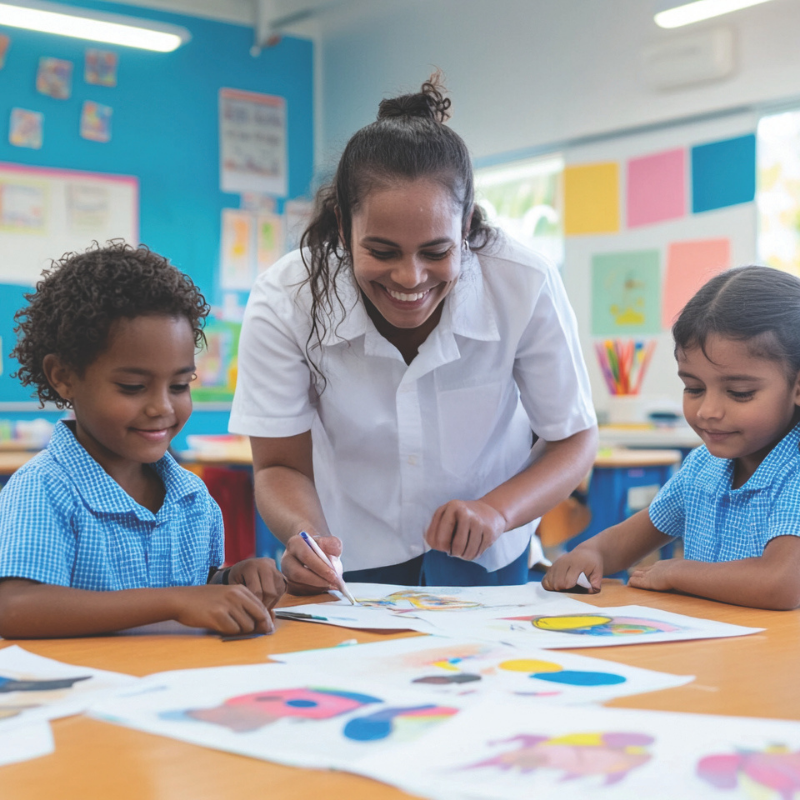
While individual classrooms play a key role, the greatest impact is seen when Social and Emotional Learning and Character Development are implemented across the whole school.
A consistent, school-wide approach supports:
- shared expectations across all classrooms
- smoother transitions between year levels
- stronger relationships between staff and students
- a cohesive, values-driven school culture.
When all staff are working from the same framework, it creates clarity for both students and teachers.
This doesn’t require starting from scratch. Many schools already have strong foundations in place. A structured program simply brings these elements together into a cohesive, aligned approach.
The Science Behind the Approach
Effective Social and Emotional Learning and Character Development are grounded in the science of learning.
Key principles include:
- Explicit instruction: clearly modelling and teaching skills.
- Cognitive load management: presenting information in manageable steps.
- Practice and reinforcement: building fluency through repetition.
- Scaffolded learning: gradually increasing independence.
When these principles are applied, students are more likely to understand, retain and apply what they learn.
This approach also supports teachers by providing clear structures and reducing the need to design lessons from scratch.
Building Confident, Capable Learners
When Social and Emotional Learning and Character Development are taught consistently, the impact extends far beyond behaviour.
Students become:
- more confident in managing themselves
- more engaged in learning
- more supportive of their peers
- more resilient when facing challenges.
These skills support not only academic success, but lifelong learning and wellbeing.
Teachers often notice that as students develop these capabilities, classrooms become more focused, collaborative and positive places to learn.
Supporting Teachers With Practical, Ready-to-Use Resources
Teachers are already doing so much to support their students. Having access to structured, high-quality resources can make this work even more effective and sustainable.
The Every Child is Special program from Good to Great Schools Australia has been designed to do exactly that.
The Social and Emotional Learning and Character Development streams provide:
- ready-to-use, curriculum-aligned lessons
- practical activities and games that work in real classrooms
- clear teaching guides with explicit instruction
- student workbooks and supporting materials
- professional learning modules to build confidence and consistency.
New Unit 2 lessons (Years F–6) are now available, continuing the progression of skills across the year.
These lessons are designed to fit easily into busy teaching schedules, with flexible 20-minute sessions that can be delivered as part of daily practice.
A Flexible Approach for Every School
Every school is unique, and flexibility is key.
The program can be implemented:
- across the whole school for a consistent approach
- within individual classrooms to support specific needs
- as part of existing wellbeing or behaviour programs.
This flexibility allows schools to build on what they are already doing, rather than replacing it.
Strengthening What Is Already Working
Teachers and school leaders across Australia are already creating positive, supportive learning environments.
Structured Social and Emotional Learning and Character Development programs don’t replace this work, they strengthen it.
They provide:
- a shared framework and language
- consistent, evidence-based strategies
- resources that save planning time
- support for both new and experienced teachers.
With everything included, from lessons to professional learning, teachers can focus on what matters most: teaching and connecting with their students.
Support Social, Emotional and Character Growth in Your School
Supporting students to develop strong social, emotional and character skills is one of the most impactful things schools can do.
Good to Great Schools Australia’s Every Child is Special program provides the tools, structure and support to make this work practical, consistent and effective across every classroom.
With free, ready-to-use resources, evidence-based design and a focus on real classroom application, it’s designed to support teachers and strengthen school communities.
Explore the program and access the new Unit 2 lessons today to continue building confident, capable learners in your school.
Register your interest today to become a GGSA Partner School and take advantage of the Great Direct Instruction Giveaway.

About Julie Grantham
Julie Grantham brings more than 40 years of experience in education as a teacher, principal and senior public servant, including three years as Director-General of the Queensland Department of Education.
During her leadership, Queensland’s state school results consistently improved and teaching and learning practices were strengthened through the introduction of world-class benchmarking.
Julie also led major reforms requiring every Queensland school to define and implement evidence-based pedagogical practices tailored to their context.
Today, as Director of Schools at Good to Great Schools Australia, Julie works with schools and education systems to design and deliver programs that ensure every student has the opportunity to succeed. Be sure to catch Julie each week as she hosts the Good to Great Schools Webinars. For more information, click the link below.