
Every Child is Special - Social and Emotional Learning
Standing Strong
Part B, Unit 4
This unit builds students’ relationship skills through explicit teaching of empathy, boundaries and responsible behaviour. Through structured lessons and guided practice, students learn to build healthy friendships, manage conflict and peer pressure, and make safe and respectful choices online. The consistent approach supports positive relationships and inclusive communities.
Starter Lessons
Year Overview
Foundation Year
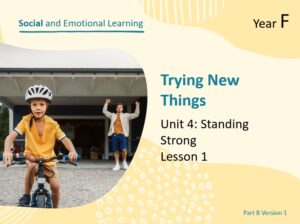
Year F, Lesson 1
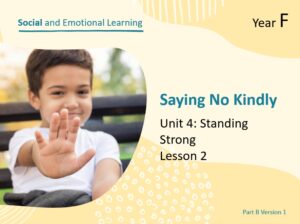
Year F, Lesson 2
Unit Overview
This unit builds students’ confidence and resilience through explicit teaching of assertiveness, perseverance and emotional awareness. Through structured lessons and practical activities, students learn to try new things, set boundaries, ask for help and keep going when things feel difficult. The unit supports students to recognise their strengths and use their voice with confidence.
Learning Objectives
- Try something new and talk about how it felt.
- Practise saying ‘No’ in a friendly way.
- Learn how to ask for help more than once.
- Learn how to notice when you feel nervous and how you can help yourself.
- Celebrate something you tried or did well.
- Notice and talk about what effort looks like in yourself and others.
- Practise doing something tricky and not giving up.
- Learn how to make a good choice, even if others want you to do something different.
- Think about what you learnt about being brave, respectful and kind.
Lessons and Resources
Lessons
- 9 lessons
Resources
- Teaching Guide
- Student Workbook
- Posters/Resources:
- My Gauge Poster: Helps students understand that their feelings can change.
- Student Reflections: Optional activity students can use to reflect on certain emotions.
- Calm Down Poster: Displays calming strategy examples to support students to manage strong feelings.
- Calm Cloud craft cut-out: In Lesson 4, students draw a calm-down strategy they can use when they feel nervous.
- Bravery Badge craft cut-out: In Lesson 9, students draw a picture showing a time they were brave.
Assessment
Lesson 9 Personal Reflection – Completed by students
Teacher Observation – Completed by teachers
The Personal Reflection and Teacher Observation are used to capture meaningful insights into each student’s growth.
Lesson 10 Optional Summative Assessment
Year 1 – Year 2
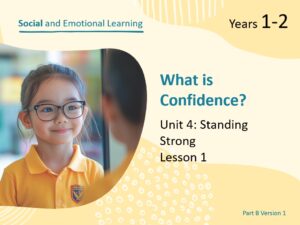
Years 1-2, Lesson 1
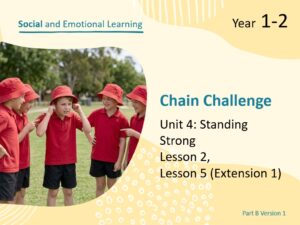
Years 1-2, Lesson 2 and 5
Unit Overview
This unit builds students’ confidence and resilience through explicit teaching of assertiveness, courage and help-seeking skills. Through structured lessons and practical activities, students learn to manage nervousness, set boundaries, stand up for others and respond positively to mistakes and challenges. The unit supports students to make respectful choices and keep trying when things are difficult.
Learning Objectives
- Learn what confidence is and how it helps you try new things.
- Learn that feeling nervous is normal when trying something new and how to keep going anyway.
- Practise saying ‘no’ in a friendly way.
- Learn how to stand up for others in a kind and respectful way.
- Learn when and how to ask for help.
- Learn who trusted helpers are and when to go to them for help.
- Learn what to do when you make a mistake.
- Learn how to take pride in your effort and keep trying when things are hard.
- Review the ways you have learnt to stand strong.
Lessons and Resources
Lessons
- 9 lessons
Resources
- Teaching Guide
- Student Workbook
- Posters/Resources:
- My Gauge Poster: Helps students understand that their feelings can change.
- Student Reflections: Optional activity students can use to reflect on certain emotions.
- Calm Down Poster: Displays calming strategy examples to support students to manage strong feelings.
- Practising and Proud Star craft cut-out: In Lesson 8, students reflect on something they worked hard at or are proud of and write it on the star.
- Stand Strong Shield craft cut-out: In Lesson 9, students write a sentence describing how they stand strong.
Assessment
Lesson 9 Personal Reflection – Completed by students
Teacher Observation – Completed by teachers
The Personal Reflection and Teacher Observation are used to capture meaningful insights into each student’s growth.
Lesson 10 Optional Summative Assessment
Year 3 – Year 4
Years 3-4, Lesson 1
Years 3-4, Lesson 2
Unit Overview
This unit builds students’ confidence and resilience through explicit teaching of personal values, integrity and assertiveness. Through structured lessons and practical activities, students learn to manage peer pressure, set boundaries, respond to setbacks and stand up for themselves and others. The unit supports students to make responsible choices and stay true to their values in challenging situations.
Learning Objectives
- Identify what values impact our choices.
- Notice peer pressure and make confident choices.
- Learn how to act with integrity even when it’s difficult.
- Practise saying ‘no’ in a confident and respectful way to set a boundary.
- Demonstrate how to keep going and learn from mistakes.
- Learn to manage disappointment and bounce back.
- Notice when others need help and do something to make them feel supported.
- Reflect on what you’ve learnt about standing up for yourself and others.
Lessons and Resources
Lessons
- 9 lessons
Resources
- Teaching Guide
- Student Workbook
- Posters/Resources:
- My Gauge Posters: Helps students understand that their feelings can change.
- Student Reflections: Optional activity students can use to reflect on certain emotions.
- Calm Down Poster: Displays calming strategy examples to support students to manage strong feelings.
Assessment
Personal Reflection – Completed by students
Teacher Observation – Completed by teachers
The Personal Reflection and Teacher Observation are used to capture meaningful insights into each student’s growth.
Optional Summative Assessment
Year 5 – Year 6
Years 5-6, Lesson 1
Years 5-6, Lesson 2
Unit Overview
This unit builds students’ integrity, resilience and leadership skills through explicit teaching and practical application. Through structured lessons and real-world scenarios, students learn to take responsibility, persevere through setbacks and lead by example. The unit supports students to make positive choices and contribute meaningfully to their communities.
Learning Objectives
- Explore what integrity means and how it connects to the choices we make and the values we have.
- Reflect on how to follow our inner compass and do the right thing even when the path is difficult.
- Learn to own a mistake without blaming others.
- Identify what trying your best looks like.
- Explore what resilience looks and feels like when things are tough.
- Experience setbacks and explain how they help us grow.
- Reflect on how leadership is about setting an example, not giving orders.
- Explore how you belong to different communities and how your actions make a difference.
- Reflect on what we’ve learnt about standing strong with integrity and personal strength.
Lessons and Resources
Lessons
- 9 lessons
Resources
- Teaching Guide
- Student Workbook
- Posters/Resources:
- Backpack of Strategies: Six backpack items that help students do the right thing when it’s hard.
- Community Cards and Community Positive Actions: Resources to support students’ learning in Lesson 8.
- My Gauge Posters: Helps students understand that their feelings can change.
- Student Reflections: Optional activity students can use to reflect on certain emotions.
- Calm Down Poster: Displays calming strategy examples to support students to manage strong feelings.
Assessment
Personal Reflection – Completed by students
Teacher Observation – Completed by teachers
The Personal Reflection and Teacher Observation are used to capture meaningful insights into each student’s growth.
Optional Summative Assessment
Other Units
Lesson Design
Lesson Objective
Success Criteria
Activating Prior Knowledge
I Do
We Do
Apple Question
You Do
Revise
Share this page: